
Here's something most people don't know: bone is living tissue. It is constantly being broken down and rebuilt in a process called remodeling.
Osteoclasts break old bone down. Osteoblasts build new bone. After 55, osteoclast activity begins to outpace osteoblast activity — which is why bone density decreases with age.
The good news: exercise is the most powerful non-pharmaceutical tool to shift this balance. But not all exercise works.
Walking, yoga, and Pilates — while great for other reasons — generally don't provide enough mechanical load to stimulate new bone formation.
Your bones respond to stress through Wolff's Law: bone adapts to the forces placed upon it. Below a certain threshold, osteoblasts simply don't activate. Above it, they lay down new material.
Here are the four types of exercise that cross that threshold:
1. Resistance Training (The Most Important One)
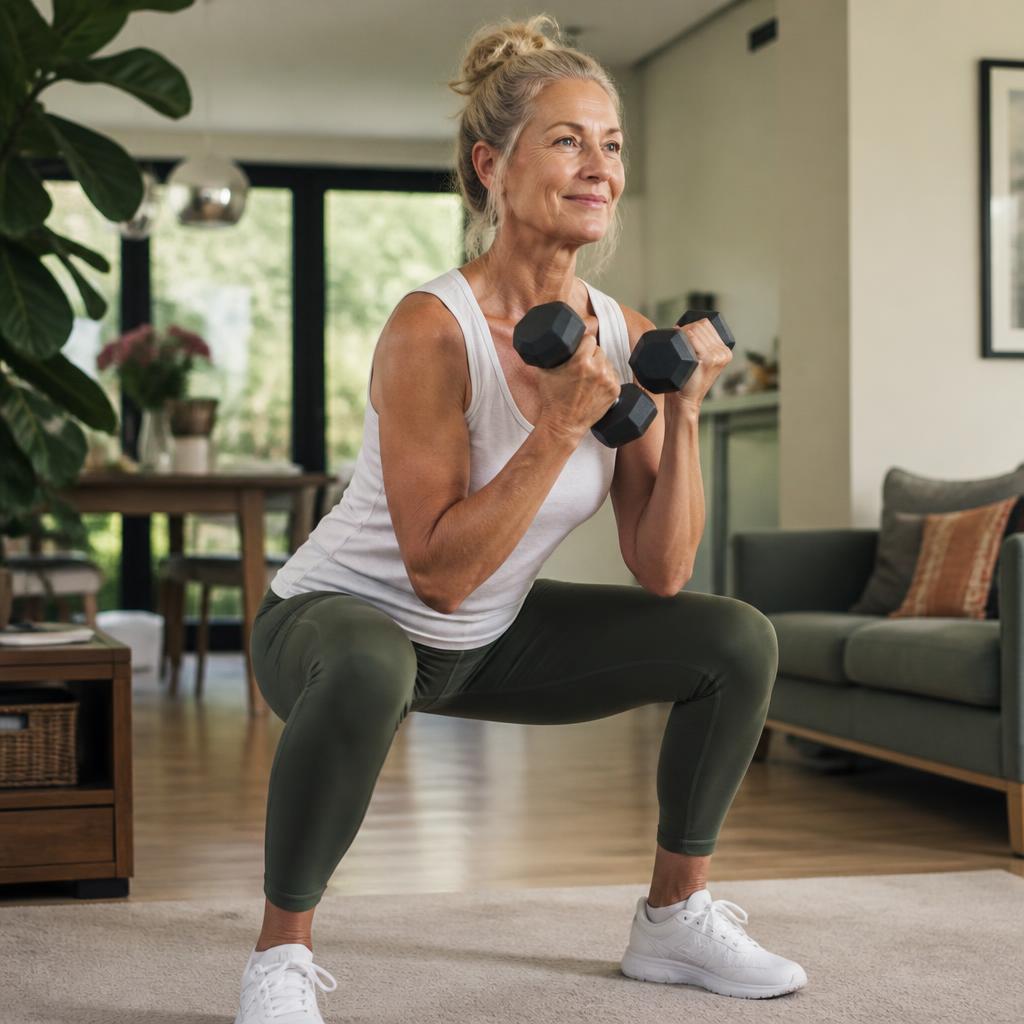
Resistance training produces the mechanical forces needed to stimulate osteoblasts at the spine and hip — the two most critical sites for fracture risk.
A 2025 systematic review confirmed that resistance training "directly stimulates bone formation" and has the strongest evidence for improving bone mineral density.
Exercises that work:
- Squats (bodyweight or weighted) — targets hip and spine
- Deadlifts (light-to-moderate load) — highly osteogenic
- Dumbbell rows and presses — builds bone in upper body
- Heel raises — targets heel bone and shin
- Step-ups — femur and tibia
Key point: the load must increase progressively over time. Your bones adapt to what they regularly experience. To keep building, the challenge must keep growing.
2. Impact Activities (With Appropriate Modifications)
Bones respond to ground reaction forces — the force your body absorbs when your foot hits the ground.
For adults 55+ without osteoporosis, moderate impact is safe and effective. For those with osteoporosis, introduce impact gradually under supervision.
Good options for 55+:
- Brisk walking uphill or with a weighted vest
- Stair climbing
- Low-impact aerobics or step classes
- Dancing — underrated for both impact and coordination
Note: flat-surface walking alone does not significantly improve bone density. The key is uphill or with added resistance.
3. Balance and Functional Training
This doesn't directly build bone — but it prevents the event most likely to break it: a fall.
Hip fractures in adults over 65 carry a 20-30% mortality rate within one year. Balance training reduces fall risk by 21-34%.
Exercises:
- Single-leg stance (30 seconds each side)
- Tandem walking (heel-to-toe in a line)
- Side-stepping with resistance band
- Sit-to-stand from a chair (the most functional exercise that exists)
Tai Chi has strong specific evidence for fall prevention. 2-3 sessions per week significantly reduces fall risk in adults over 65.
4. Combined Aerobic + Resistance (The Best Protocol)
Combining aerobic exercise with resistance training produces better bone outcomes than either alone.
A practical 45-minute combined session:
- 10 min: brisk walking warm-up (uphill or on incline)
- 20 min: resistance exercises (squats, rows, heel raises)
- 10 min: balance training (single-leg, tandem walking)
- 5 min: cool-down and mobility
The Critical Reminder
You cannot build new bone with supplements alone. Calcium and Vitamin D are the raw materials. Exercise is the signal that tells your body to use them.
Without the mechanical stimulus of resistance and impact exercise, your osteoblasts stay dormant — regardless of how well you eat.
Getting It Right for Your Body
Load has to match your current capacity. That’s why Silver Strength™ and personal training in Ottawa both start with an assessment rather than a template.
Did this help? Share it →
Ready to start? Book a free 15-minute call with Coach Mateo — no commitment, just clarity.
Book your free call →
Get practical coaching insights from Coach Mateo.
Receive occasional coaching insights, event updates and practical strategies for becoming stronger, healthier and better than yesterday.
No spam. Unsubscribe anytime.