
Why Gymnasts Lose Skills They Already Had — And How to Get Them Back
July 15, 2026 · 5 min read
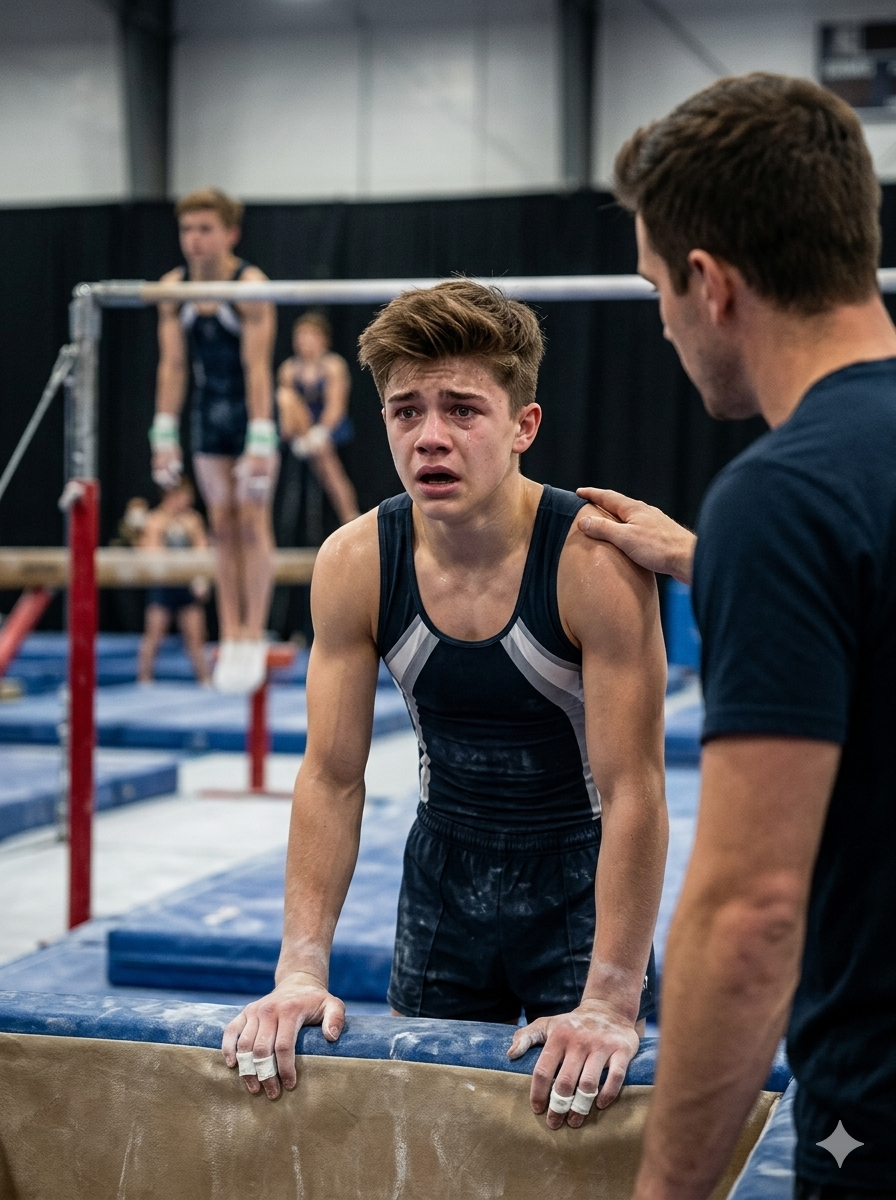
Hey Tumblers family! 👋
I wanted to share something that's been on my mind since one of our gymnasts said something I know many of you have heard before:
"Coach, I had it. I did it hundreds of times. And then one day... I just couldn't anymore."
We were talking about the Kovacs — that release move on the high bar where the gymnast lets go, does a full back somersault, and catches the bar again. A skill he had already landed. A skill that lived in his body. And then one day, without warning, it was gone.
Except it wasn't gone. The fear arrived.
And when fear arrives, the brain does something very specific. Today I want to explain exactly what happens, why it happens, and what we can actually do about it — as gymnasts and as parents.
Why the Brain "Erases" a Skill You Already Had
Dr. Andrew Huberman, neuroscientist at Stanford University, explains that fear is not just an emotion — it's a reflex. And like every reflex, it's triggered automatically before you even have a chance to think.
Here's what happens inside your gymnast's brain the moment they approach that skill:
The amygdala — an almond-shaped structure on both sides of the brain — acts as the brain's threat detector. The moment it registers danger (real or remembered), it activates what Huberman calls the threat reflex: heart rate goes up, muscles tense, attention narrows, and the body floods with adrenaline. All of this happens in milliseconds.
Here's the part that surprises most people: the fear system is a memory system. The brain doesn't just respond to what's happening right now — it responds to what happened before. If a gymnast had a scary fall, a bad spot, or even just one moment where they felt out of control on a skill, the amygdala files that away. And the next time they approach that element, the brain fires the threat reflex before the body even moves.
This is why your gymnast can visualize the skill perfectly, coach someone else through it — and still freeze the moment they're on the bar. It's not a lack of skill. It's a very well-functioning brain doing exactly what it was designed to do: protect them.
The problem is that this protective reflex is now working against them.
The Basketball Shooter Analogy
Think about a basketball player who suddenly can't make free throws. They've made that shot ten thousand times. Their form is correct. Their mechanics haven't changed. But under pressure, in front of people, when it counts — they miss.
The ones who get out of that slump fastest are never the ones who try harder. They're the ones who take the pressure off first.
A relaxed shooter — someone playing around, joking with teammates, shooting with zero stakes — makes significantly more shots than a tense one. Why? Because the prefrontal cortex (the thinking, planning brain) is back online. The amygdala is quiet. The body can do what it already knows how to do.
The same principle applies to gymnastics. You don't muscle your way through fear. You ease your way around it.
3 Steps to Help Your Gymnast Reclaim a Lost Skill
Step 1 — Remove the stakes completely
Before they try the full skill, remove every element of performance pressure. No judges. No teammates watching. No "you have to land this." Start with drills, shapes, and partial progressions that feel almost boring. The goal is not to do the skill — the goal is to let the brain experience the movement without activating the threat reflex. When there's nothing to fear, the amygdala stays quiet and the body starts remembering.
Step 2 — Build momentum gradually
Think of it like a snowball rolling downhill — you start small and let momentum build naturally. Go from the basics to slightly harder variations, one small step at a time, only when the gymnast feels ready. Never push to the next level when the body is tense. The brain needs to collect a series of small wins — each one telling the amygdala: this is safe, this is familiar, this is okay. Over time, those wins rewire the response. Dr. Huberman explains that the brain can build new neural pathways to replace fearful ones — but only when the nervous system is calm enough to learn. Pressure closes that window. Patience keeps it open.
Step 3 — Let the gymnast lead
This one is for the parents especially. When your child is working through fear, the most powerful thing you can do is follow their pace — not yours. Ask "how did that feel?" instead of "why can't you just do it?" Acknowledge that the fear is real and that their brain is doing its job. An athlete who feels safe and supported moves through fear faster than one who feels judged or rushed. Your calm is contagious. Your impatience is too.
A Note for Parents
If your gymnast is going through this right now, please know: this is not a mental weakness. This is not a sign that they're not tough enough or don't want it badly enough. This is a sign that their brain is healthy and working exactly as designed.
The gymnasts who come out of these moments stronger are the ones who had coaches and parents who understood what was happening — and gave them the space to work through it. You are a huge part of that equation.
If you're not sure how to support them through it, that's exactly what I'm here for.
📲 DM me on Instagram @coachmateo or message me at wa.me/13435432526
If This Sounds Familiar
Mental blocks are a nervous-system problem, not a character problem. We work through them with sports psychology coaching and the Perform™ pathway for competitive athletes.
Did this help? Share it →
Ready to start? Book a free 15-minute call with Coach Mateo — no commitment, just clarity.
Book your free call →

Get practical coaching insights from Coach Mateo.
Receive occasional coaching insights, event updates and practical strategies for becoming stronger, healthier and better than yesterday.
No spam. Unsubscribe anytime.